
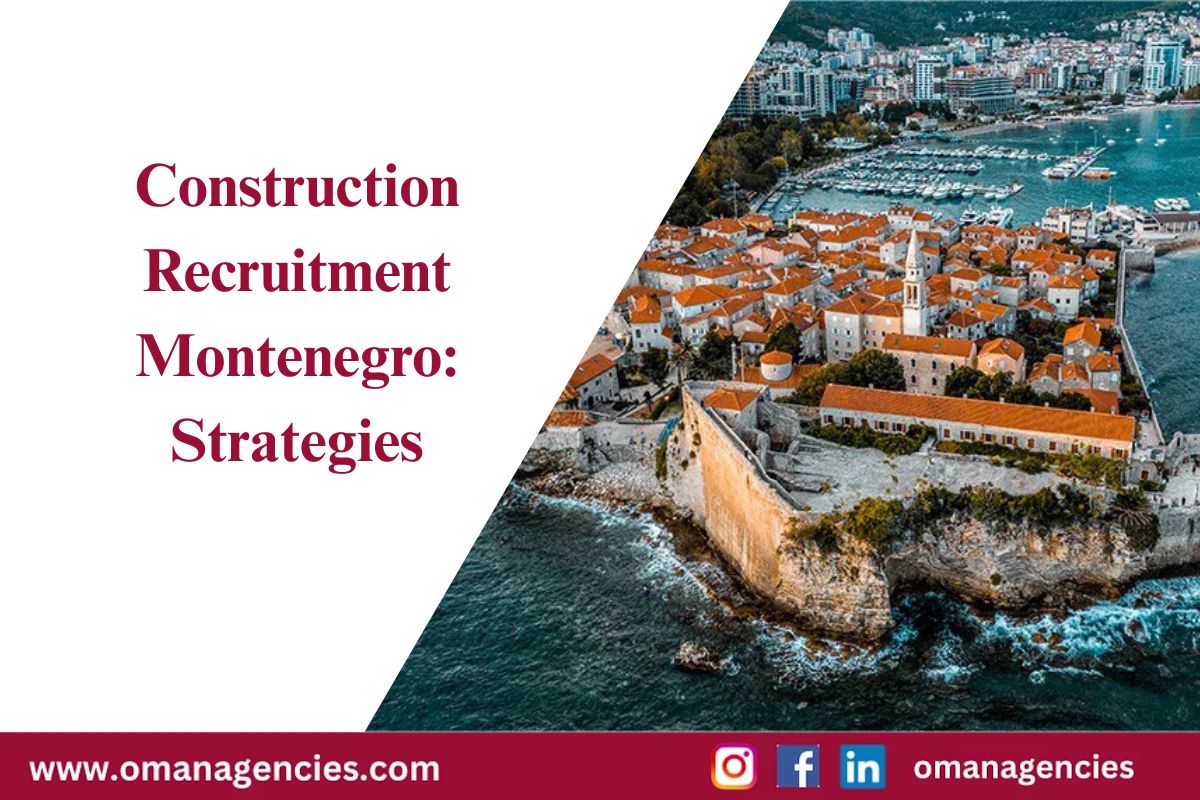
Construction Recruitment Montenegro: Strategies
Montenegro’s Infrastructure Surge: Recruitment Tactics for Construction Firms
If you are running a construction company in Montenegro right now, your problem is rarely a lack of projects.
The government has launched an ambitious multi-billion euro programme for roads, rail, and other transport links, backed by EU and international funds. Energy and tourism projects are also on the priority list.
The pipeline looks exciting. The question is simple:
Where will you find enough skilled people actually to build all this?
Let us look at what is happening on the ground and how you can adapt your Montenegro construction recruitment strategy to keep projects moving.
Montenegro is building fast, but labour is tight
Recent analysis of the local construction sector highlights two big realities:
- Investment in transport, energy, and digital infrastructure is growing and is central to Montenegro’s long-term growth strategy.
- Qualified labour is not keeping up. Contractors report that the local workforce alone cannot cover all specialised roles needed on sites.
This is not only a Montenegro issue. Across the Western Balkans and Europe, labour and skills shortages are now entrenched challenges in construction and related trades.
For you, as a contractor or project owner, that means delays, overtime, and constant firefighting if you do not rethink your infrastructure staffing approach.
How Montenegro construction recruitment is changing
In the past, you might have staffed a project primarily through local contacts and national job ads. Today, that is rarely enough.
Modern Montenegro construction recruitment usually mixes three sources:
- Local workers for roles where language and local experience really matter.
- Regional workers from neighbouring countries who already understand the Western Balkans work culture.
- International trades and technicians are sourced through specialist agencies for large or long-duration projects.
This broader sourcing is significant for EU project manpower. EU-supported road, rail, and energy projects have strict timelines, reporting, and safety expectations. If you cannot show that your team can deliver, it becomes harder to win or keep such contracts.
So the goal is not just to fill vacancies. It is to build stable, mixed teams that can deliver multiple phases of work without constant reshuffling.
Where do trades agencies Podgorica fit in
Many firms now work with trade agencies Podgorica and international partners to handle volume hiring. Instead of chasing individual CVs, they pass precise requirements to a specialist and let them run the sourcing, screening, and paperwork.
This is where Oman Agencies comes in for Montenegro. The company has more than 50 years of experience and has recruited over 50,000 candidates for projects in 35+ countries, including construction and infrastructure roles.
For employers in Montenegro, Oman Agencies can help with:
- Sourcing skilled trades from Asia, Africa, and Europe through established recruitment networks.
- Screening workers for technical skills, safety awareness, and basic language ability.
- Planning manpower in phases to match each stage of a road, tunnel, bridge, or building project.
- Coordinating documentation and mobilisation so your internal HR team is not overwhelmed.
The blog on recruitment agencies in Montenegro explains how local and international hiring can be blended for better results.
For you, the benefit is simple: fewer surprises and a more predictable flow of building sector hires across multiple sites.
A simple three-step infrastructure staffing playbook
You do not need a complex HR strategy document. Start with this basic playbook and refine it as you go.
1. Map roles by project phase
Break your project into phases and ask:
- Which roles are critical in each phase?
- Which ones must be local and which can be filled from abroad?
- Where do you need bulk numbers of trades vs smaller teams of specialists?
This makes infrastructure staffing more precise. You are not just saying “we need 80 workers”, but “we need 10 concrete workers here, six formwork carpenters there, four electricians in this phase” and so on.
2. Decide your sourcing mix early
For each role, decide:
- Local recruitment only
- Local plus regional
- Regional plus overseas workers sourced through Oman Agencies or other trades agencies Podgorica partners.
Share this plan early with your agency so they can prepare candidate pools, especially for EU project manpower, where tender timelines are strict.
3. Standardise testing and onboarding
Work with your agency to set clear trade tests for masons, steel fixers, crane operators, and other key trades. When workers arrive:
- Give them a structured safety induction.
- Make reporting lines and site rules very clear.
- Check in during the first month to catch small issues before they become big problems.
This is how you turn individual building sector hires into reliable, long-term crews.
FAQ: Recruitment tactics for Montenegro construction firms
- Can I legally bring in foreign workers for construction projects in Montenegro?
Yes, but only within Montenegrin labour and migration rules. Many employers already use foreign workers in services and construction due to local labour shortages. A reputable agency will guide you on permits, documentation, and compliance for each nationality. - What kinds of roles can Oman Agencies help with?
Oman Agencies recruits for a wide range of construction roles, including trades, technicians, engineers, and project staff for international projects. Their Montenegro-focused page describes how they support contractors with end-to-end recruitment. - Why not just rely on local hiring?
Local hiring is essential and should always be part of your plan. The challenge is that current and upcoming infrastructure needs often exceed local supply, especially for specific trades and experienced supervisors. External reports on Western Balkans labour markets show that skills shortages are likely to continue.