
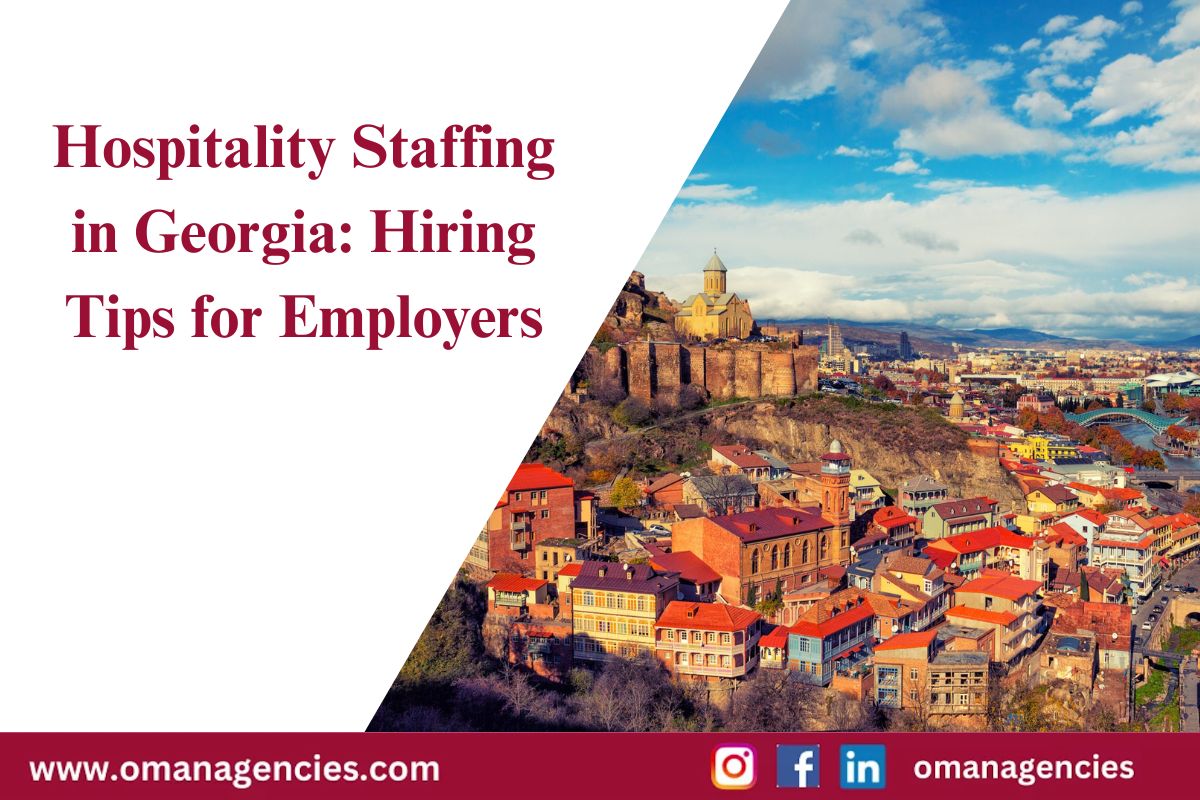
Hospitality Staffing in Georgia: The “Busy Weekend” Playbook for Hotels and Restaurants
Let’s start with a scene you probably know too well.
It’s a busy check-in window. The lobby is full. A guest wants an early room. Another guest is upset about a missing towel. The phone keeps ringing. Meanwhile, one housekeeper is absent, the breakfast counter needs refilling, and the kitchen is short a pair of hands. Nobody is being “lazy.” You are simply short-staffed, and when hospitality goes short-staffed, it never stays a small problem. It spreads.
In Georgia, this pressure is getting more common because travel demand has been rising, and reported 2025 international visits crossed 6.8 million, with year-on-year growth, which is the kind of number that turns “normal weekends” into “all hands on deck” weekends.
So the real question is not “How do we hire people?”
The real question is “How do we stop staffing from turning into a recurring emergency?”
The hidden reason hospitality hiring keeps failing
Most properties do hire. The frustrating part is what happens after.
You hire late because you waited until the rush started. You hire fast because you do not have time. People join and then disappear because the job was not what they imagined, or the shifts are heavier than they expected, or the training felt rushed. Managers patch the gaps with overtime, and slowly, your best people burn out first.
If this sounds familiar, you do not need a complicated HR system. You need a calmer, repeatable hiring rhythm.
Build your plan around “pressure points,” not headcount
Instead of deciding “We need 15 people,” try this approach:
Ask your supervisors one simple question: Where do we break first on a busy day?
Most of the time, the answers are predictable:
- Front desk during check-in and check-out waves
- Housekeeping when rooms turn over back-to-back
- Restaurant service during peak meal windows
- Kitchen during the rush when timing matters
- Maintenance for the small issues that become big complaints
When you hire for those pressure points first, the whole operation feels more stable, even if you are still building depth in other areas.
Choose reliability over “perfect experience.”
In hospitality, experience is useful, but reliability is priceless.
A candidate who is average but dependable will often outperform a “great CV” who quits in week one, and the only way to spot that early is to screen for it like you actually mean it.
What works in the real world is not a long interview panel. It is a short, focused check that covers:
- Can they communicate clearly and calmly?
- Do they truly fit your shift reality (weekends, late shifts, split shifts)?
- Do they understand what a busy day looks like in your property?
- Can you validate attendance and behaviour with a basic reference check?
This is also how you cut your 7-day drop-offs, which is the silent killer in hospitality staffing.
About 2026: keep compliance inside your hiring timeline
If your staffing plan includes foreign nationals, timing matters more now.
Georgia is introducing a work permit system from 1 March 2026 for most foreign workers, and there is also a transition requirement for some foreign nationals already working in Georgia to regularise permits within the stated window. Separately, residence permit timing guidance includes applying well before the lawful stay expires (a 40-day buffer is commonly referenced in official guidance).
You do not need to be an immigration expert to handle this well. You just need to stop promising start dates that assume paperwork is instant, because that is where hiring plans usually break.
A hiring rhythm that feels realistic during peak months
Here’s a simple way to run hiring without turning it into chaos:
Start small, hire in batches, and always keep a backup bench.
A batch can be 3, 5, or even 8 people. The number matters less than the discipline:
- You shortlist
- You interview quickly
- you select
- you onboard as a group
- You review performance within the first 7–10 days
- You replace early if needed, instead of waiting until the shortage becomes visible to guests
This approach is boring in the best way because it makes staffing predictable.
What to track so problems show up early
You do not need fancy dashboards. Track a few signals weekly:
- Joining rate (selected vs actually joined)
- First-week drop-off (people who leave before they settle)
- Overtime dependency (spikes usually mean you are thin)
- Quality rework (rooms redone, repeated service complaints)
- Guest-facing friction (front desk and service issues that repeat)
These are the numbers that tell you the truth before reviews do.
Ending with Oman Agencies: how they help without making it feel like “more recruitment noise.”
If you have ever worked with a recruiter who simply dumps profiles into your inbox, you already know why employers get tired of the process. Hospitality does not need volume. Hospitality needs fit, joining discipline, and replacements that do not take two weeks.
This is where Oman Agencies can be genuinely useful for hospitality hiring in Georgia, because the support is built around the pipeline, not just sourcing. Instead of treating hiring like a one-off transaction, the team typically works like a recruitment operator: you share clear requirements once (roles, headcount, salary range, shift pattern, start date), and the process runs as a system that keeps producing shortlists, supporting onboarding batches, and keeping replacement options ready when someone drops out.
If you are hiring for a season, this matters because it protects your managers from constant firefighting. If you are hiring year-round, it matters because it lets you build a stable bench over time, which most hospitality businesses want but rarely manage to create on their own.
What to send Oman Agencies to get started (so it moves fast)
If you want the process to be smooth, send a brief that includes:
- Roles + headcount (example: 6 housekeepers, 2 front desk, 3 kitchen)
- Shift pattern and weekly off rules
- Language expectations
- Start date and onboarding timeline
- Accommodation and transport details (if applicable)
The clearer your inputs, the cleaner the shortlist, and the faster the joining.
Wrapping up
Hospitality staffing gets stressful when hiring only begins after the rush starts. When you plan around your pressure points, screen for reliability, hire in small batches, and keep a backup list ready, the whole business feels calmer and more professional, even on the weekends that usually break you.
And if you want a partner to run that rhythm with you in Georgia, Oman Agencies is a strong fit when you care about steady staffing more than random CV volume, because their value shows up in the unglamorous parts that actually matter: shortlisting that matches your reality, onboarding that happens in batches, and replacements that are ready before your team is exhausted.
