
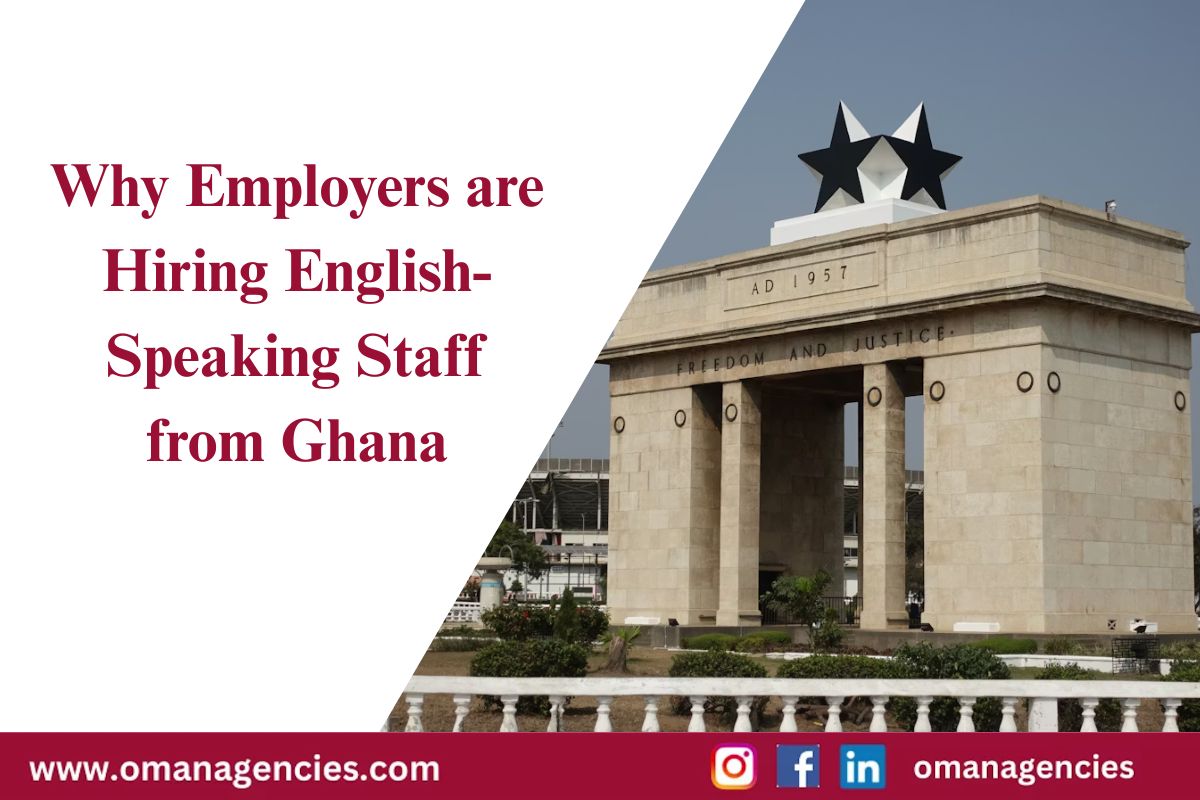
The Rising Demand for an English-Speaking Workforce from Ghana
You can usually feel it when a project is about to get messy.
A client wants a faster rollout. Your operations team needs people who can follow instructions without confusion. Your site supervisor wants staff who can communicate clearly with teams from different countries.
For many employers, that is exactly why working with a manpower agency in Ghana has become a practical move rather than a “nice to have.” Ghana has a strong reputation for English communication and steady, trainable talent that fits international workplaces.
Why Ghana keeps coming up on global hiring shortlists
1) English makes day-to-day work smoother
When your workforce can communicate clearly, everything gets easier: onboarding, safety briefings, SOPs, reporting, and customer handling.
English is Ghana’s official language, and it is widely used in education and formal settings.
So if your teams operate in English, hiring from Ghana reduces friction from day one.
2) Employers are not only hiring “one role,” they are building stable teams
The rising demand is not limited to one industry. Employers often look to Ghana for roles like:
- customer support and back-office ops
- hospitality and service staff
- security, facility staff, and supervisors
- drivers, warehouse teams, and logistics support
- skilled and semi-skilled site roles (depending on destination needs)
This is why you will also hear phrases like “English-speaking workers in Africa” and “overseas staffing in Ghana” more often now. It is about building teams that can function quickly in multi-national environments.
3) It is a good balance of skills, attitude, and adaptability
Most global employers do not want “perfect CVs.” They want people who show up, learn fast, and follow the process.
Ghanaian candidates are often shortlisted because they are comfortable in structured work environments and adapt well to new systems when training is clear. This matters a lot in customer-facing roles and operational teams where consistency is everything.
What does a manpower agency actually help you solve
Let’s be honest: the challenge is rarely “finding people.”
The real challenge is finding the right people, on time, with a clean hiring process.
A good Ghana manpower recruitment partner helps you with:
- Role clarity (what the job really needs, not just a generic title)
- Shortlisting with basic screening (communication, experience, attitude)
- Documentation discipline (so mobilisation does not get stuck)
- Joining management (so selected candidates actually show up)
- Replacement planning (because dropouts can happen anywhere)
Compliance matters, even when the hiring feels straightforward
If you are hiring Ghanaian staff for overseas roles, you want to be careful about the process and licensing.
Ghana’s labour framework includes provisions around private employment agencies and licensing requirements.
That is one reason employers prefer working through a structured agency setup instead of informal sourcing.
And if you are hiring people into Ghana (or transferring someone to Ghana), work and residence permits have specific documentation requirements that employers should plan for.
When it makes the most sense to hire Ghana workers
Hiring from Ghana is especially useful when:
- You need English communication without a heavy onboarding time
- Your local hiring pipeline is slow or inconsistent
- Your project needs dependable staffing for 6–24 months
- You want a scalable pipeline, not one-off hiring
In simple terms: if you want reliability, not constant rehiring, hire Ghana workers through a structured process.
How to choose the right recruitment partner
When you are selecting a manpower partner, ask for clarity on:
- Screening method (how do they check communication and role fit?)
- Trade tests or skill checks (where relevant)
- Documentation checklist and timeline
- Mobilisation plan and replacements policy
- References or project experience in similar roles
A simple hiring flow you can copy
- Share your role requirements (skills, salary range, start date, location)
- Get shortlists with screening notes
- Interview and select
- Documentation + verification
- Mobilisation in batches
- Onboarding + performance tracking
Success metrics to track (keep it practical)
- Time to shortlist
- Interview-to-selection ratio
- Joining rate (selected vs joined)
- 60–90 day retention
- Supervisor feedback on communication and reliability
Quick checklist before you start
- Roles and expectations are written clearly
- screening includes communication checks
- The timeline includes documentation buffers
- Backup candidates are ready for dropouts
- Compliance and licensing are handled properly
Wrapping up
The reason Ghana is in demand is simple: English-language communication reduces friction, and employers gain access to dependable talent who can join international teams quickly.
If you want to build a reliable pipeline for Ghana’s skilled workers abroad, Oman Agencies can support sourcing, screening, and overseas placement with a structured process.
